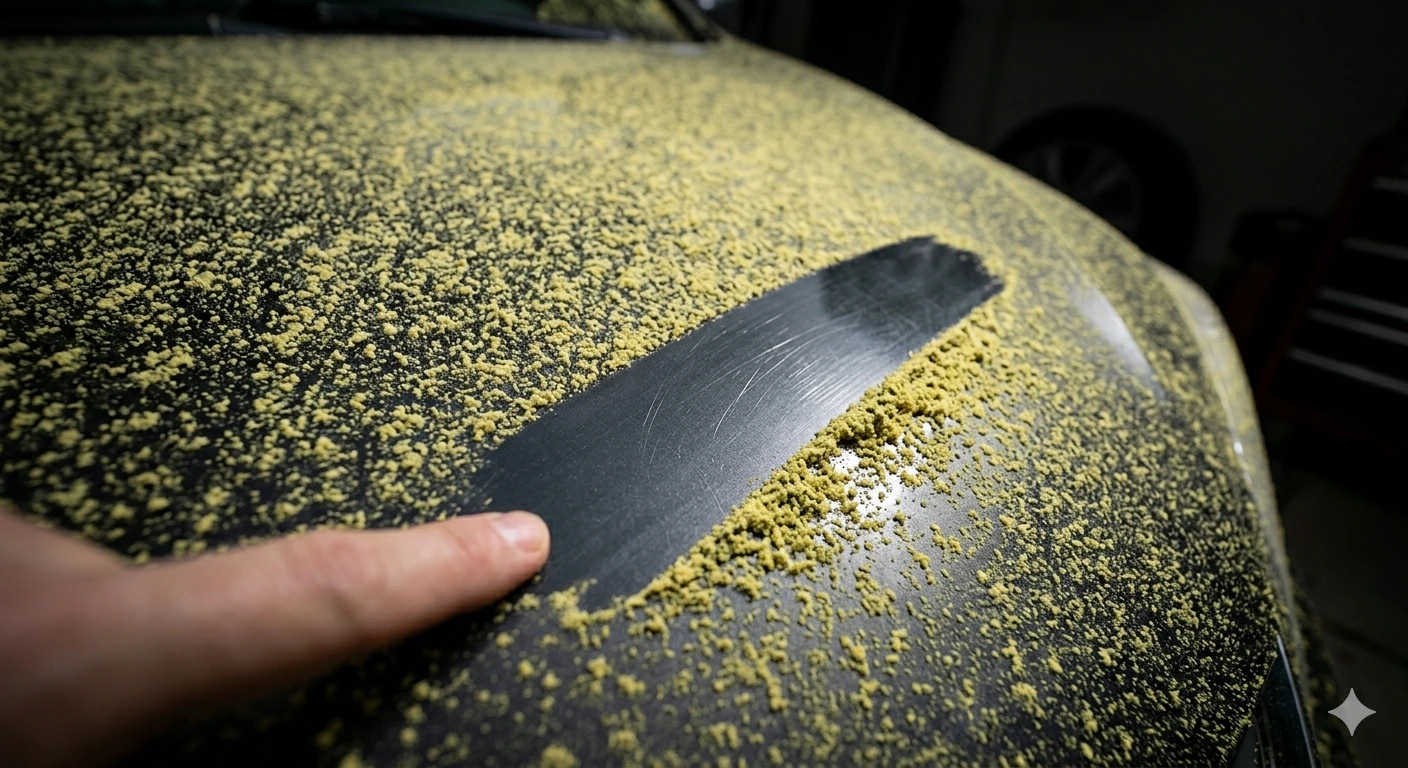
If you've stepped outside in the Portland metro this month and found your car coated in a fine yellow-green dust, you already know: pollen season has arrived. The Willamette Valley is one of the worst regions in the country for airborne pollen, and while that's bad news for your sinuses, it's also quietly damaging your vehicle's paint — often in ways you can't see until it's too late.
Why Pollen Is More Than Just a Cosmetic Nuisance
Most people think pollen is just dirt. Wipe it off and you're done. The problem is that pollen is biologically active — it contains proteins and oils that become acidic when they combine with morning dew or rain. That acidic mixture sits against your clear coat and slowly etches into the surface. Left long enough, it causes micro-scratches and dull spots that a simple car wash won't fix.
This is especially common in May and June in the Portland area, when tree pollen from oak, birch, and alder is at its peak. Parking under trees — something almost unavoidable in neighborhoods like Lake Oswego, West Linn, and Milwaukie — makes the exposure even worse.
What a Proper Spring Detail Actually Does
A standard car wash runs water and brushes over your paint. It removes loose debris but doesn't address the bonded contaminants that pollen leaves behind. A professional exterior detail is a different process entirely:
- Hand wash removes surface pollen and grime without scratching
- Clay bar treatment pulls bonded contaminants — including pollen residue, tree sap, and road grime — out of the clear coat that a wash can't touch
- Polish and wax or sealant lays down a protective barrier so the next round of pollen has less surface to bond to
If your paint has already taken some damage from pollen seasons past, a paint correction service can remove the light surface scratches and oxidation that dull your finish over time.
Why Spring Is Also the Right Time for Ceramic Coating
If you've been thinking about protecting your paint long-term, spring is the ideal time to do it. Ceramic coating creates a hydrophobic layer over your clear coat that causes water, pollen, and sap to bead up and roll off rather than bonding to the surface. One application can last years, which means you're protected through multiple pollen seasons without having to re-wax every few months.
The coating bonds best when applied to clean, decontaminated paint — exactly what a proper spring detail sets you up for.
The Mobile Advantage During Pollen Season
Here's the catch with pollen: the moment you drive your freshly washed car home, it starts collecting again. When we come to you — at your driveway in Oregon City, your office parking lot in Clackamas, or your home in Happy Valley — your car stays right where it is. No driving through pollen-heavy air to get to a shop. No sitting in a lot for hours collecting more dust while you wait.
That's the core advantage of mobile detailing, and pollen season makes it more obvious than ever.
How Often Should You Detail During Pollen Season?
For most vehicles in the Portland metro, we recommend at least one full exterior detail in the spring (May is ideal) and another in early fall before the rainy season sets in. If you're parking outside under trees or driving a lot, a monthly maintenance wash during peak pollen months (April through June) keeps the damage from accumulating.
Not sure what your car needs? Contact us and describe your situation — we're happy to make a recommendation before you book.
Serving Oregon City, Clackamas, Milwaukie, West Linn, Gladstone, Happy Valley, Lake Oswego, Sunnyside, and the greater Portland metro. We come to you.