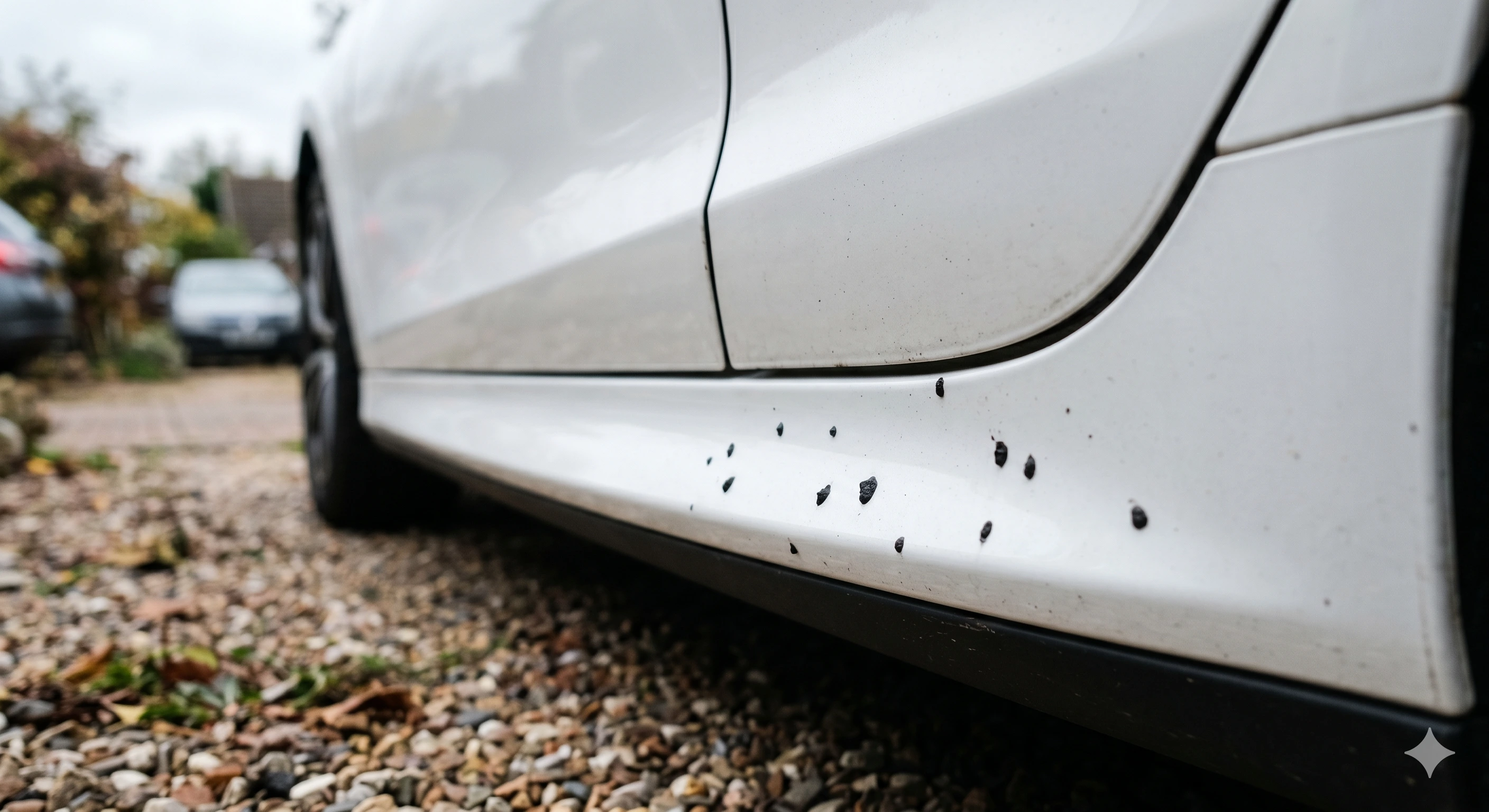
Road tar from summer construction work is one of the more underrated paint hazards in the Portland area. Those black specks on your rocker panels and lower door panels aren't just cosmetic — tar is petroleum-based and bonds chemically to clear coat within 48 to 72 hours in summer heat. Catch it early and it wipes off clean. Wait too long, and you're in paint correction territory.
Why Summer Heat Makes Tar So Much Harder to Remove
Tar sprays off fresh asphalt in a semi-liquid state and lands on your car while it's still pliable. In cooler weather, it stays that way longer. When pavement surface temps hit 130–140°F in July and August — which they do regularly in the Portland metro — that tar can set against your clear coat within a day or two. By the time you notice the specks, they may already be partially embedded.
The chemical bonding is what makes this a real paint problem, not just a mess. Petroleum compounds in tar interact with the polymers in your clear coat, and that reaction speeds up dramatically in heat. A tar spot that takes 3 minutes to dissolve on a 60-degree day might need a full 10-minute dwell time and two applications on a 90-degree day in August.
What Actually Removes Road Tar (and What to Skip)
The best tools are dedicated tar removers — products like Gyeon Tar, CarPro Tar X, or Meguiar's Heavy Duty Bug and Tar Remover. These are formulated to dissolve petroleum compounds without attacking clear coat or rubber trim. The process is straightforward: saturate the spots, let the product dwell for 2–3 minutes, then wipe with a clean microfiber using zero scrubbing pressure. The tar should slide off.
WD-40 works in a pinch. It softens tar for the same reason a dedicated remover does — it's petroleum-based — but it leaves an oily residue that attracts more dirt. If WD-40 is all you have, use it. Just wash the area thoroughly afterward and follow up with a wax or sealant.
Two things to skip entirely: gasoline and acetone. Both remove tar, but they also strip wax, soften rubber seals, and can attack clear coat if the car is hot. The short-term win isn't worth it.
One thing we see often: people grab regular Goo Gone from the hardware store. That formula contains citrus solvents at a concentration that can cloud rubber trim and leave a filmy residue. Goo Gone Automotive is a different product and is safe for painted surfaces. Read the label before you spray.
Where Oregon Construction Season Hits Your Car Hardest
Oregon construction season runs May through October, when ODOT does the bulk of its paving on I-205, I-84, Highway 26, and the smaller roads throughout Clackamas County. If you're commuting through the Clackamas corridor or running the 205 between Portland and Oregon City, you're passing through active paving zones multiple times a week.
The pattern we see on cars coming in from those routes is consistent: tar concentrated on the lower rocker panels (the body panels just below the doors), the rear wheel arches, and the back bumper — all areas that catch spray-back from the car ahead of you. We almost never see it on the roof or hood unless there was overhead paving work directly above the lane.
When you wash your car, run your fingertips over those areas after rinsing. Fresh tar has a slight tackiness even when wet. If you feel it, that's your cue to get a tar remover on it before the next hot day locks it in.
If the tar has already etched into your clear coat — a dull spot where the speck was, faint hazing around it — that's beyond what a tar remover can fix. At that point, paint correction is the only way to restore the finish. We've seen otherwise pristine cars come in with dozens of tiny etch marks after a summer of highway commuting through construction zones.
Common Questions About Road Tar on Car Paint
How long does road tar take to permanently damage car paint?
In summer temperatures above 80°F, tar can begin chemically bonding to clear coat within 48 to 72 hours. In cooler weather, you may have 5 to 7 days before it sets. The sooner you remove it, the easier and safer the process.
Is WD-40 safe to use on car paint for tar removal?
Yes, but it's not ideal. It softens tar effectively because it's petroleum-based, but it leaves an oily film that attracts dust. Use a proper tar remover if you have one — and if you use WD-40, wash the area thoroughly afterward.
Can I use Goo Gone on my car's paint?
Use Goo Gone Automotive specifically, not the standard hardware store version. The regular formula can dull rubber trim. The automotive version is safe on painted surfaces when used with light pressure and a microfiber.
What do professional detailers use for heavy tar buildup?
We use CarPro Tar X or Gyeon Tar for most jobs. For heavy or set-in buildup, we follow with a full decontamination wash and clay bar treatment to pull out any residual contamination the tar remover loosened but didn't fully lift.
Tar removal is part of every mobile exterior detail we do — it's one of those things that's easy to miss on your own but makes a real difference in how your paint looks and how long it holds up. If you've been driving construction corridors around Portland this summer, it's worth having us take a look. And if bird droppings are adding to the problem — another summer paint threat with its own damage timeline — our guide on bird dropping damage covers that one too.
Serving Oregon City, Clackamas, Milwaukie, West Linn, Gladstone, Happy Valley, Lake Oswego, Sunnyside, and the greater Portland metro. We come to you.