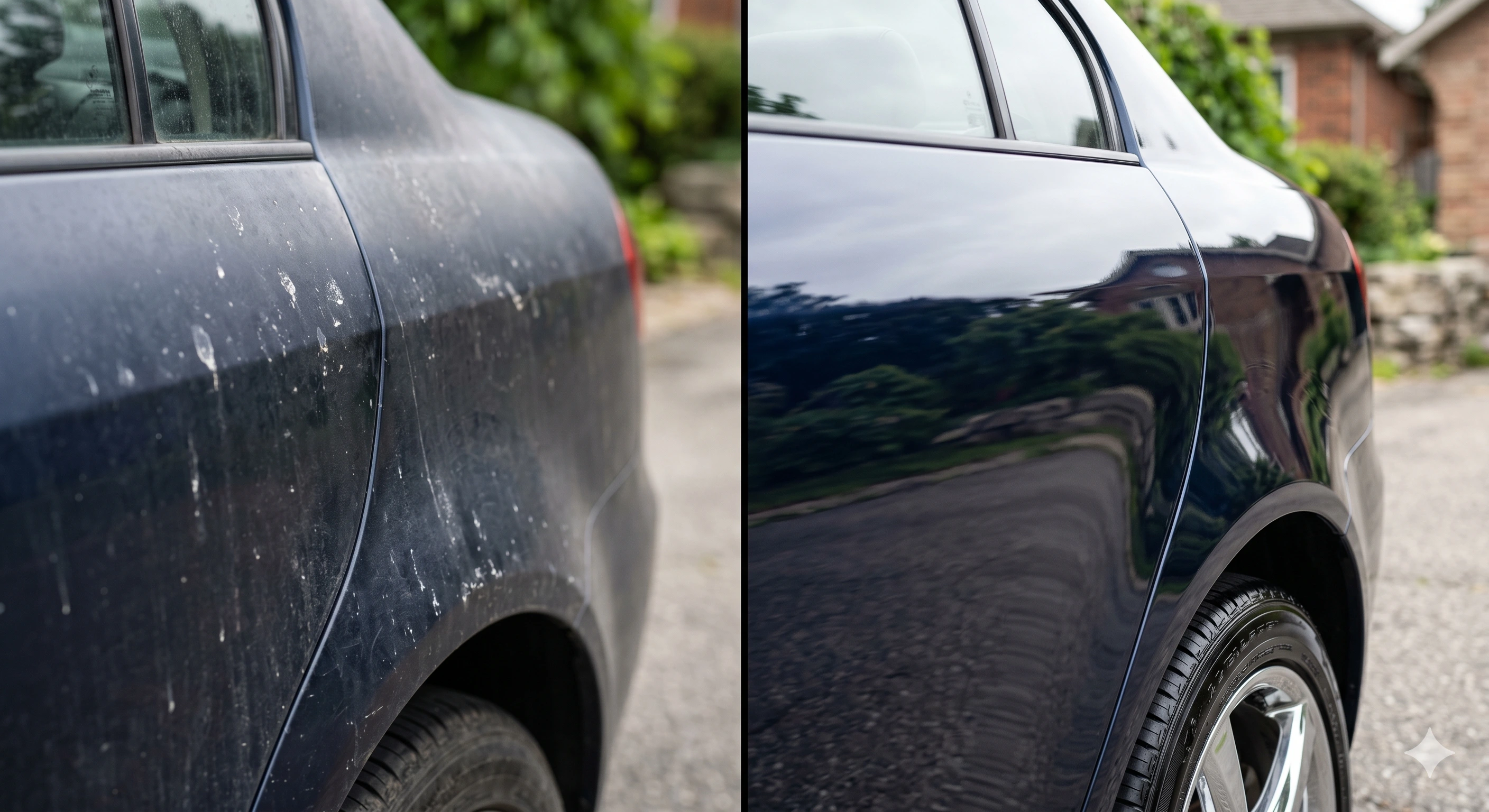
One of the most common questions we get from new customers is some version of: "How often do I actually need to have my car detailed?" It's a fair question, and the honest answer isn't a single number. The right detailing frequency depends on your vehicle type, how you use it, where you park it, and whether you've invested in protective coatings that extend the time between services.
That said, there are useful general guidelines — and for drivers in the Portland metro and Clackamas County area, some specific environmental factors to keep in mind.
The Baseline: Full Detail Every 4–6 Months
For most everyday passenger vehicles driven in Oregon, a full interior and exterior detail every four to six months is a reasonable baseline. This schedule accounts for seasonal transitions — fall buildup going into winter, and winter salt and road film cleanup heading into spring — and keeps both the interior and exterior in genuinely good condition without over-servicing.
If you do nothing else, this twice-a-year cadence will dramatically outperform the "whenever it looks really bad" approach that most drivers default to. The key insight is that vehicle surfaces are constantly accumulating damage that isn't visually obvious: embedded iron particles in paint from brake dust, UV degradation on leather, and biological contamination like pollen and tree sap that etches into clear coat given enough time. Catching these issues every few months prevents them from becoming permanent.
Higher Frequency for Specific Situations
Several situations call for more frequent detailing — roughly every 4–8 weeks for exterior maintenance, and quarterly or more for interiors:
Vehicles parked outdoors in Oregon. If your car sits outside year-round under trees, near the coast, or in an area with heavy pollen or bird activity, the exterior is under constant chemical attack. Sap, bird droppings, and pollen can etch into paint in as little as a few days in warm weather. A monthly exterior maintenance wash and spray wax dramatically reduces cumulative damage compared to waiting months between services.
Family vehicles with kids or pets. Interior soiling accumulates faster in family vehicles than almost anywhere else. Food spills, muddy shoes, pet hair, and drink container condensation are a weekly occurrence. These vehicles benefit from a light interior refresh every 6–8 weeks and a deeper clean quarterly. Without regular maintenance, odors and staining become progressively harder to treat.
Vehicles used for rideshare or business. If your vehicle generates income, its appearance directly affects customer perception and your earnings. Rideshare drivers should plan for a light interior detail every two to four weeks, depending on passenger volume. Business vehicles that clients ride in or park near should be treated similarly.
High-value or collectible vehicles. If you own a newer luxury vehicle, a sports car, or a collector piece, you likely already understand that these deserve more frequent attention. Paint correction and ceramic coating are worth considering as a foundation to make ongoing maintenance far more efficient.
How Protective Coatings Change the Equation
One of the biggest misconceptions about car detailing is that it's always reactive — something you do when the car looks bad. Protective services like ceramic coating and Paint Protection Film fundamentally change the maintenance equation by making surfaces dramatically more resistant to contamination in the first place.
A vehicle with a professionally applied ceramic coating requires significantly less maintenance than an unprotected one. Contaminants don't bond as readily, water and dirt sheet off more completely, and the clear coat underneath is protected from oxidation and UV damage. For coated vehicles on our monthly maintenance program, the visits are shorter, the results are better, and the long-term cost is lower than reactive full details on an unprotected vehicle.
Think of it this way: an uncoated vehicle might need a full detail every four months with significant work each time. A coated vehicle on a monthly maintenance plan gets lighter but more consistent care, maintains a better appearance year-round, and protects a larger investment for longer.
Oregon-Specific Environmental Factors
The Portland and Clackamas County area has a few environmental characteristics that make detailing more important than in drier climates:
Year-round rain and moisture. Oregon's wet season runs roughly October through May, and constant moisture creates conditions where mold and mildew can develop in vehicle interiors — especially in vehicles with wet carpet or fabric seats. This is not a minor issue. Once mold establishes itself in a headliner or seat foam, the remediation is significantly more involved. Our mold remediation service addresses active growth, but prevention through regular drying and interior treatment is far preferable.
Pollen season in spring. The Willamette Valley is notorious for high pollen counts, and the Portland metro shares in this. Vehicle paint accumulates a heavy yellow-green pollen layer during spring that, combined with rain, creates an acidic film that sits on clear coat. Washing during peak pollen season — or at minimum washing within a day or two of major pollen events — prevents this from becoming an etching problem.
Tree canopy in residential neighborhoods. Much of Milwaukie, Lake Oswego, West Linn, and Portland's inner neighborhoods have dense tree canopy. Vehicles parked under firs and maples collect sap, pine needles, bird droppings, and tannin-laden water throughout the year. These contaminants require more than a simple car wash to address properly.
A Simple Framework
If you want a simple framework: schedule a full detail at least twice a year regardless of how the car looks. Add monthly exterior maintenance if you park outdoors. Add quarterly interior service if you have kids, pets, or frequent passengers. And consider a ceramic coating if you want to reduce both the frequency and effort of all future maintenance.
We serve Oregon City, Portland, Lake Oswego, Milwaukie, West Linn, and throughout the Clackamas County area. Call (971) 272-8747 to schedule or get a quote — we'll come to wherever your vehicle is parked.